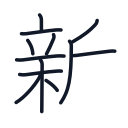
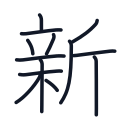
あたら
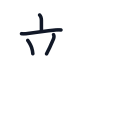
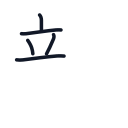
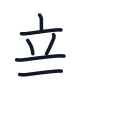
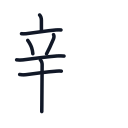
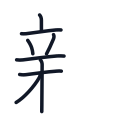
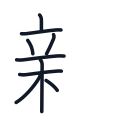
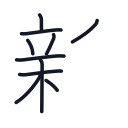
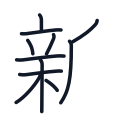
新
new
U+65B0
Unicode hex codepoint — a unique identifier for this character in the Unicode standard.
JLPT 4
Japanese-Language Proficiency Test level. N5 is beginner, N1 is the most advanced. This kanji appears at the 4 level.
Grade 2
Japanese school grade level in which this kanji is taught. Grade 1 is first year of elementary school.
13 strokes
Freq #51
Frequency rank among the ~2,500 most common kanji in Japanese newspapers. Lower number = more common.
Heisig #1502
Index in James Heisig's "Remembering the Kanji" — a popular textbook that teaches kanji through mnemonics and stories.
Meanings
- new
- fresh
- novel
word
あたら atara Kun'yomi Kun'yomi (訓読み) — the native Japanese reading of this kanji. Used when the kanji appears alone or with okurigana (trailing hiragana).
あら ara Kun'yomi Kun'yomi (訓読み) — the native Japanese reading of this kanji. Used when the kanji appears alone or with okurigana (trailing hiragana).
にい nii Kun'yomi Kun'yomi (訓読み) — the native Japanese reading of this kanji. Used when the kanji appears alone or with okurigana (trailing hiragana).
しん shin On'yomi On'yomi (音読み) — the Sino-Japanese reading, derived from Chinese pronunciation. Most commonly used in compound words (jukugo).
新
shin
new
更
新
koushin
renewal
最
新
saishin
latest
新
聞
shinbun
newspaper
新
規
shinki
new
新
宿
shinjuku
Shinjuku
朝
日
新
聞
asahishinbun
Asahi Shimbun (newspaper)
新
鮮
shinsen
fresh
新
人
shinjin
newcomer
新
幹
線
shinkansen
bullet train
革
新
kakushin
reform
新
作
shinsaku
new work
新
年
shinnen
New Year
毎
日
新
聞
mainichishinbun
Mainichi Shimbun
読
売
新
聞
yomiurishinbun
Yomiuri Shimbun
新
書
shinsho
new book
新
刊
shinkan
new publication
新
築
shinchiku
new construction
新
着
shinchaku
new arrival
新
設
shinsetsu
newly established
新
型
shingata
new model